
Pragmatic AI: Moving Beyond the Hype into High-Impact Workflows

The “honeymoon phase” of Generative AI is officially over. In boardrooms across the globe, the conversation has shifted from “What can AI do?” to “What is AI actually doing for our bottom line?” For B2B leaders, staying competitive in 2026 requires a transition from speculative AI (playing with prompts) to Pragmatic AI (embedding intelligence into […]
The “Zero‑Click” Content Strategy: Winning in the Age of AI Search

For years, marketers measured success by clicks, traffic, and conversions. But the rise of AI search engines, social platforms, and rich snippets has changed the game. Today, much of your audience consumes content without ever clicking through to your website. This is the era of the Zero‑Click Content Strategy – where visibility, authority, and brand […]
The “Dark Funnel” & Attribution: Why Traditional Marketing Metrics Fall Short

In the B2B marketing landscape, attribution models are under pressure. Marketers want to know exactly which campaigns drive pipeline, but the reality is more complex. Enter the “Dark Funnel” – the hidden buyer journey that happens outside of your visibility. Prospects are consuming content, talking to peers, and forming opinions long before they ever fill […]
MWC Barcelona 2026: The Three Trends CIOs Should Pay Attention To

Every year, Mobile World Congress (MWC) Barcelona becomes the global stage where the future of technology is revealed. The 2026 edition brought together more than 100,000 attendees and nearly 3,000 companies, making it the largest global gathering for connectivity, telecom, and digital innovation. This year’s theme, “The IQ Era,” emphasized the growing convergence between artificial […]
Generative Engine Optimization (GEO) vs. Traditional SEO: Why “Ranking #1” Is No Longer the Goal

For years, Search Engine Optimization (SEO) has revolved around one central ambition: ranking #1 on Google’s search results. Businesses invested heavily in keyword strategies, backlinks, and technical SEO to secure that coveted top spot. But with the rise of Generative AI search engines-from Google’s AI Overviews to Microsoft Copilot-the rules of the game are changing. […]
Why CIOs Mistake Activity for Progress: The 5 Strategy Gaps Stalling IT Projects in 2026

In the race to modernize IT infrastructure, many CIOs confuse activity with progress. One of the most common missteps? Lifting and shifting monolithic applications to AWS without refactoring them. While it may look like modernization on paper, in reality, it’s just moving technical debt to a more expensive neighborhood. True modernization requires more than migration-it […]
Enterprise Architecture for the AI-First Decade (2026–2036)

Between 2026 and 2036, enterprises will undergo the most transformative shift since the dawn of cloud computing. The next decade won’t be defined by digital transformation alone – it will be defined by AI-native transformation, where artificial intelligence becomes the foundation of strategy, operations, and value creation. To compete in the AI-first era, organizations must […]
Cloud vs Hybrid vs On-Prem – Which Enterprises Should Choose in 2026?
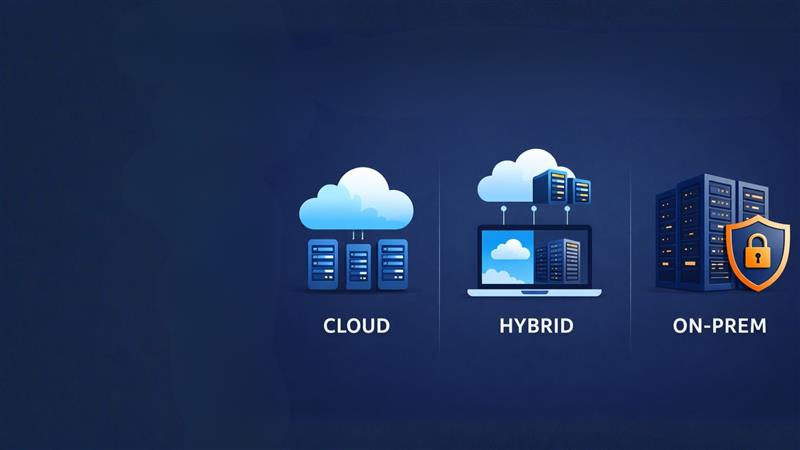
As enterprises accelerate digital transformation in 2026, one of the most strategic decisions they face is choosing the right infrastructure model: Cloud, Hybrid, or On-Premises. Each option brings its own advantages, limitations, and cost implications – and the right choice depends on a company’s industry, data sensitivity, scalability needs, and long-term vision. Below is a […]
The 2026 AI Playbook: How to Build an AI-Native Enterprise

By 2026, AI is no longer a futuristic advantage – it’s the backbone of every competitive enterprise. Companies that thrive will be those that evolve from being AI-enabled to AI-native: organizations where intelligence, automation, and data-driven decision-making power every function. Becoming AI-native is not just an upgrade; it’s a complete operating model shift. Here is […]
Digital Transformation & Cloud Strategy: The Backbone of Modern Business Innovation

Organizations across industries are rethinking how they operate, engage customers, and deliver value. At the heart of this transformation lies one foundational enabler: the cloud. A well-defined cloud strategy accelerates digital transformation by driving agility, scalability, and innovation – allowing businesses to adapt to market shifts, optimize costs, and unlock new opportunities faster than ever […]